Publications
Technical books
Written for practitioners working on mining and industrial projects: portfolio optimization, quantitative risk, quality management, modularization, contracts, execution control, scheduling with Primavera P6, and preparation for PMI certifications in construction.
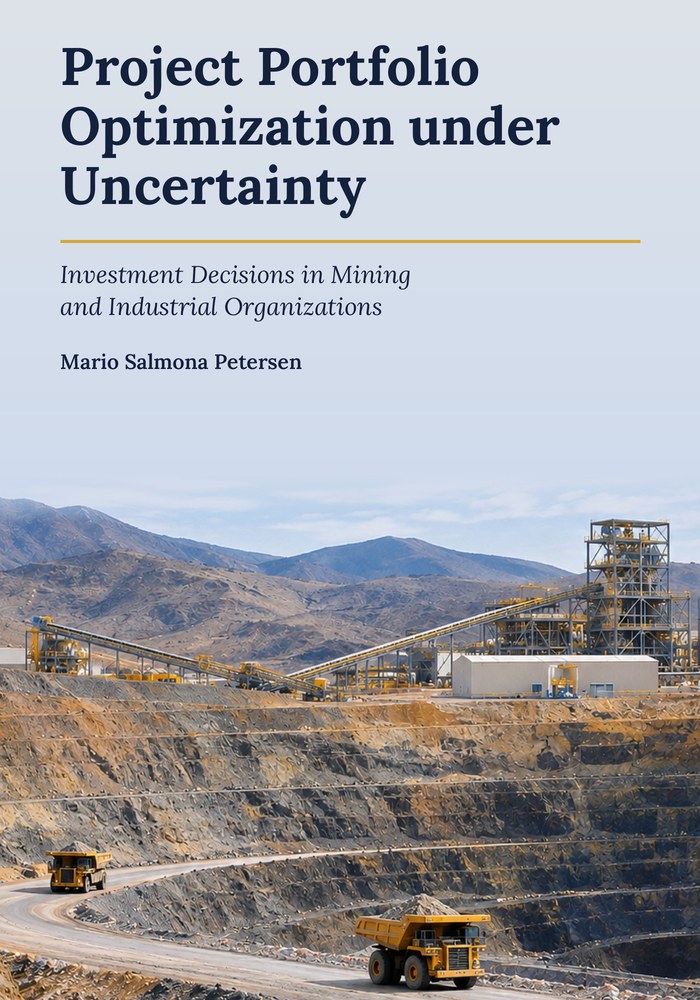
New · 2026
Project Portfolio Optimization under Uncertainty
Investment Decisions in Mining and Industrial Organizations.
Capital portfolios do not fail only because their projects are poorly executed; they also fail because projects are poorly selected and poorly scheduled. The book presents a practical, auditable method to decide which projects to execute and when, combining influence diagrams, Monte Carlo simulation, mixed-integer optimization and tail-risk measures to build the efficient frontier between value and risk. Two complete cases, a copper mining division and an industrial group, run through the book.
Paperback · Kindle · About the book · Take the portfolio survey
Spanish edition — Optimización de Carteras de Proyectos bajo Incertidumbre · view on Amazon
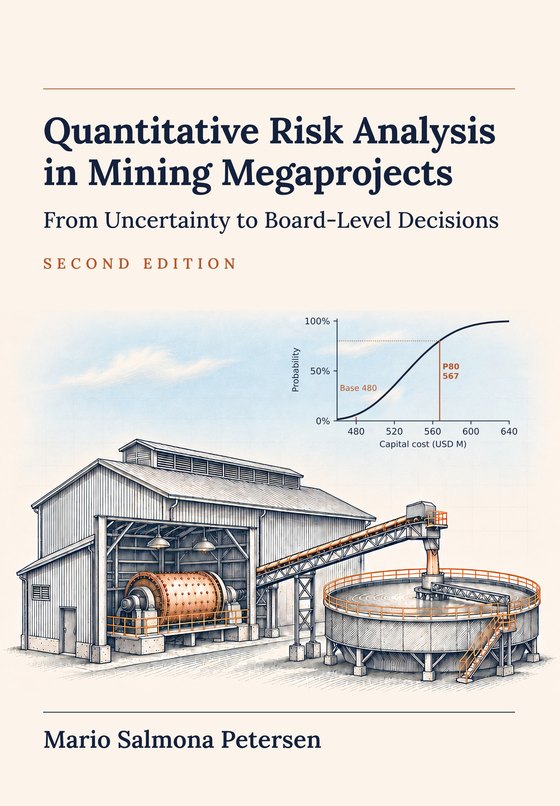
Second edition, 2026
Quantitative Risk Analysis in Mining Megaprojects
From Uncertainty to Board-Level Decisions.
The second edition follows quantitative risk analysis all the way to the investment decision. A single concentrator expansion case runs through every chapter, with linked capital cost, schedule and value models, and the book adds risk appetite and capacity, portfolio risk, value of information and real options, communication with boards and investment committees, and a QRA system for mining projects.
Paperback · Kindle · ISBN-13 979-8141104121
First edition — ISBN-13 979-8245548548 · view on Amazon
Spanish edition — Análisis Cuantitativo de Riesgos en Megaproyectos Mineros · view on Amazon

Managing Megaprojects in the Mining Industry
Second edition, 2026 — rewritten and expanded
Most mining megaprojects overrun their budget, slip their schedule and fall short of committed production. The cause is rarely engineering: it lies in poorly grounded early decisions, weak owner organisations, estimates that ignore uncertainty and risks nobody manages in time. The book covers the full project life cycle, from opportunity to stable operation, and closes with a chapter of lessons learned from mining megaprojects in Chile and worldwide, documented and anonymised.
Paperback · Kindle · also available in Spanish
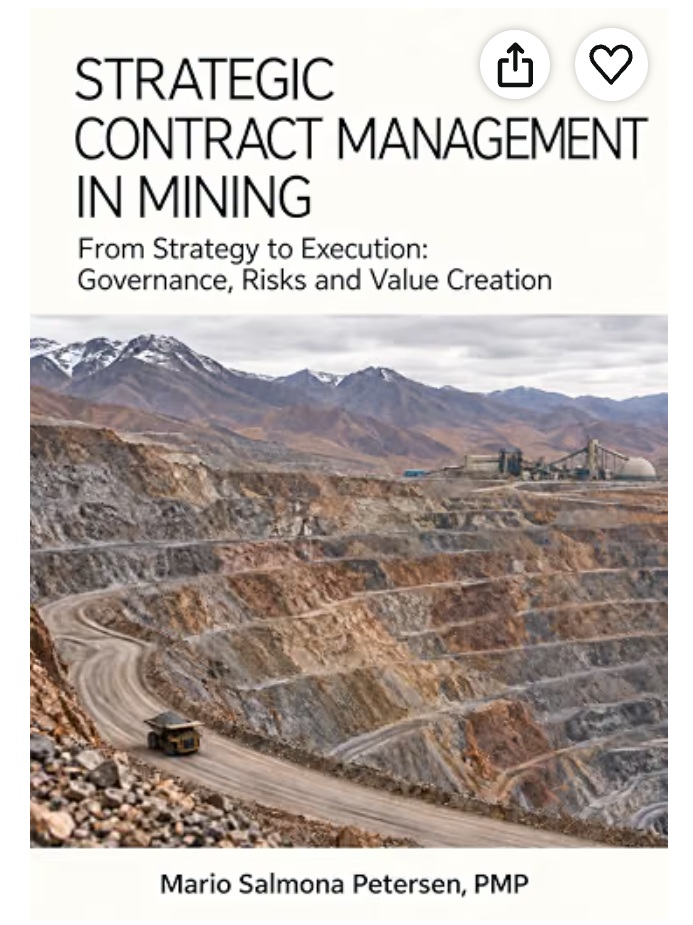
Strategic Contract Management in Mining
From Strategy to Execution, Governance, Risks and Value Creation
New publication. The full contract lifecycle in complex mining projects: pre-investment and value creation, contracting models and risk allocation, execution and progress control, change governance and the Sponsor's role, and early dispute resolution through close-out and commissioning. Its central idea: project value is created in pre-investment and protected in execution.
While the focus is mining, where my experience lies, most of the book transfers to any capital-intensive industrial project. Chapters 1, 2, 4 and 5 are of general application; the mining-specific content concentrates in chapter 3, on tailings and productivity at high altitude, together with the geological uncertainty discussed in chapter 1. The pitfalls it describes are, unfortunately, universal.
English edition on Amazon · Spanish edition · Kindle and paperback

Quality Management in Mining Projects under ISO 9001:2026
From the Management System to Commissioning
The new edition of ISO 9001 applied, requirement by requirement and phase by phase, to the full life cycle of a mining project, with the evidence an auditor expects. A guide for owners, engineering firms and contractors.
Paperback · Kindle · also available in Spanish
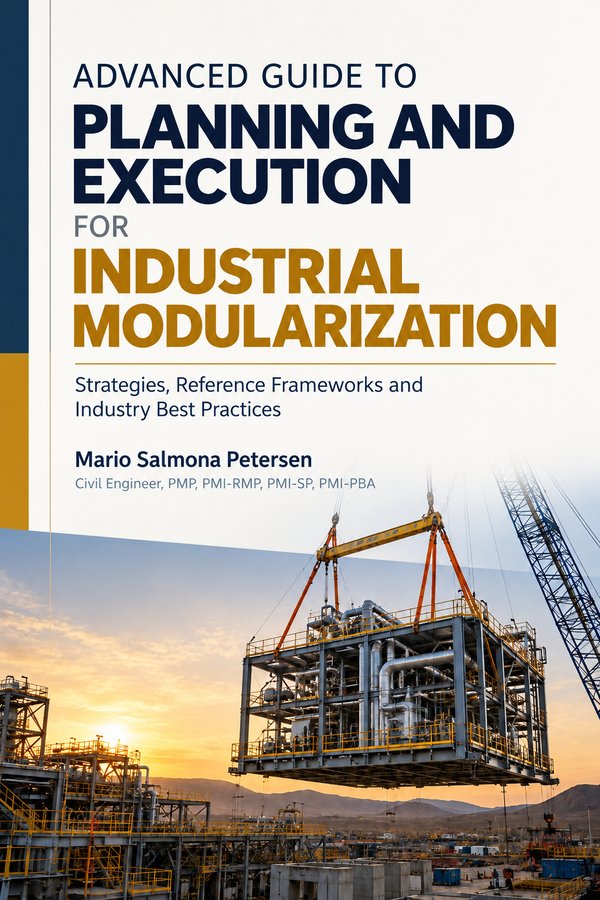
Advanced Guide to Planning and Execution for Industrial Modularization
Strategies, Reference Frameworks and Industry Best Practices
Construction Industry Institute research (RT-421 and RT-396) turned into a practical guide, from framing the opportunity through to commissioning.
Paperback · Kindle · also available in Spanish
Mastering PMI Certification for Construction Professionals
A series aimed at construction and mining professionals preparing for PMI credentials, with cases drawn from real project environments.
Other titles
- Control de Ejecución 4.0 — Daily Work Plan methodology and Power BI
- Primavera P6 en Proyectos Mineros Complejos
- Further titles on contracts, risk and construction management